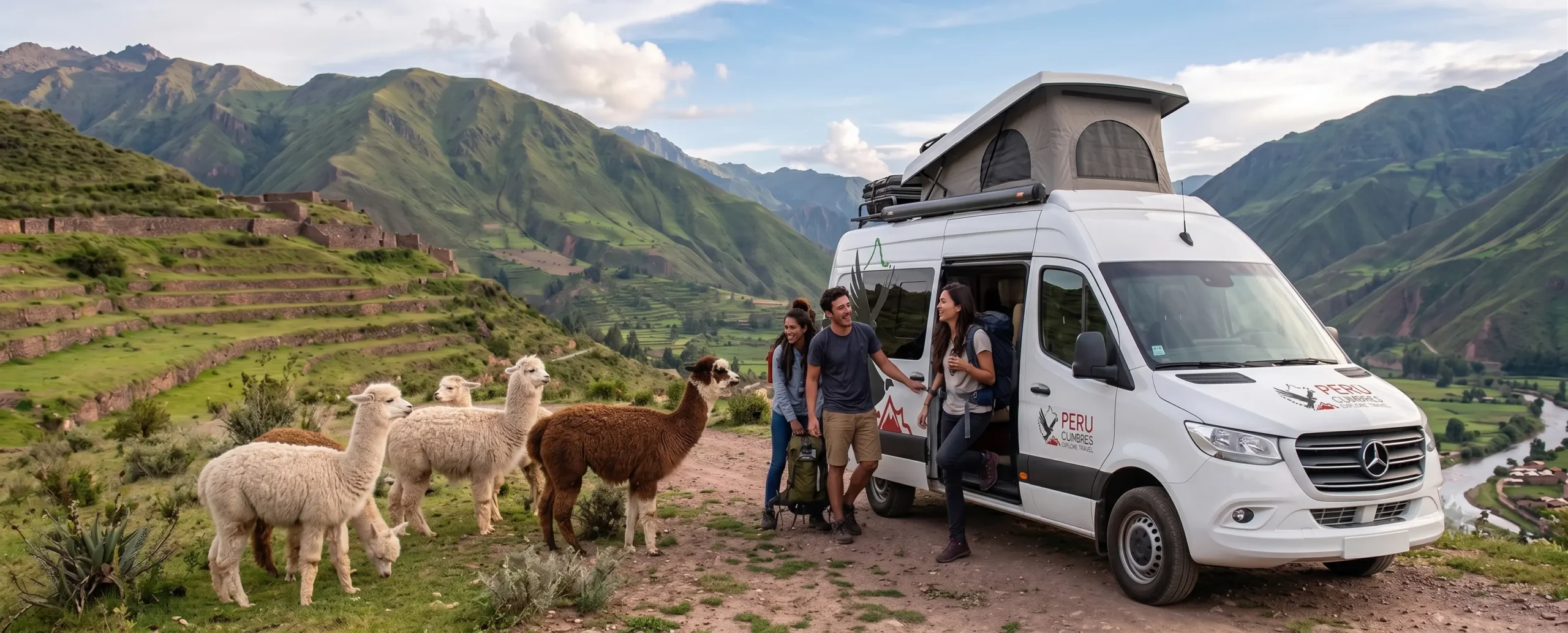
Sacred Valley of the Incas: Complete Guide to Cusco’s Treasure (2026)

The Sacred Valley of the Incas is one of Peru’s most fascinating destinations and an essential stop for anyone wanting to immerse themselves in the history, culture, and stunning landscapes surrounding Machu Picchu. Located between the city of Cusco and the Inca citadel, this valley brings together impressive archaeological sites, traditional villages, vibrant handicraft markets, and a natural wealth that makes it one of the most visited places in South America.
In this comprehensive guide, you will discover everything you need to know to organize your visit to the Sacred Valley, from the main attractions to practical tips to make the most of your experience.
Table of Contents
Where is the Sacred Valley?
The Sacred Valley is located in the Cusco region, following the course of the Urubamba River. It extends approximately between the towns of Pisac and Ollantaytambo, crossing fertile agricultural lands surrounded by towering Andean mountains.
Thanks to its lower altitude compared to the city of Cusco, the valley enjoys a milder, warmer climate throughout most of the year. This geographical advantage favored the development of major agricultural centers during the Inca Empire.
Why is it called the Sacred Valley?
The Incas considered this territory a sacred place due to several key factors:
- Its remarkably fertile lands.
- The abundance of fresh water flowing down from Andean glaciers.
- Its strategic location bridging Cusco and the Amazon basin.
- The presence of the Urubamba River, which was revered as a sacred river.
Within this region, they developed advanced agricultural systems and built some of the empire’s most important ceremonial centers.
Main Places to Visit
Pisac
Pisac perfectly combines one of Cusco’s most important archaeological complexes with a world-famous handicraft market. The agricultural terraces offer some of the most breathtaking views of the entire valley.
- Don’t miss: The Inca terraces (andenes), ceremonial temples, the ancient Inca cemetery, and the bustling artisan market.
Urubamba
Known as the heart of the Sacred Valley, Urubamba is where most travelers stop to indulge in traditional Peruvian gastronomy at a buffet lunch. It is also an excellent, peaceful spot to stay and rest before continuing your journey to Machu Picchu.
Ollantaytambo
Ollantaytambo is the only living Inca town that still preserves its original urban layout. Its imposing fortress was the setting for a major historic battle between the Incas and Spanish conquistadors. Today, it serves as the primary train station for traveling to Machu Picchu.
Chinchero
Famous for its rich textile traditions, Chinchero features natural dye workshops, an iconic colonial church built over an Inca palace, and beautiful archaeological terraces. It is the absolute best place to learn about ancestral Andean weaving techniques.
Maras
The small, quaint town of Maras retains a deeply traditional atmosphere and serves as the gateway to one of the most photographed landscapes in Peru.
Maras Salt Mines (Salineras de Maras)
More than three thousand salt evaporation ponds are still actively harvested by local families using hand-crafted techniques passed down through generations. The visual contrast between the white salt terraces and the brown mountains creates a uniquely stunning landscape.
Moray
Moray stands out for its massive, circular concentric terraces. Used by the Incas as an agricultural laboratory, these structures allowed them to experiment with different microclimates and crop variations. Today, it remains one of the most visually surprising archaeological sites in the region.
How Much Time Do You Need to Explore the Sacred Valley?
The duration depends heavily on your overall travel style:
- Half Day: Perfect if you only want to focus on an excursion to Maras and Moray.
- Full Day: The classic option that allows you to explore Pisac, Urubamba, and Ollantaytambo in a single day.
- Two Days: The best option to visit all the primary attractions at a relaxed pace, spend a night in the valley to adjust to the altitude, and seamlessly board your train to Machu Picchu.
Best Time to Visit
The Sacred Valley can be visited comfortably all year round, but you will experience two distinct seasons:
Dry Season (April to October)
- Clear blue skies and sunny days.
- Higher influx of visitors.
- Excellent weather conditions for crisp photography.
Rainy Season (November to March)
- Completely lush, green mountain landscapes.
- Fewer tourists at major attractions.
- Occasional rain showers (usually in the afternoon).
What to Wear & Pack
To stay comfortable during your hikes, we highly recommend packing:
- Comfortable hiking shoes or sneakers with good grip.
- Sunscreen and a wide-brimmed hat.
- Sunglasses.
- A light jacket or windbreaker (weather can change quickly).
- A rain jacket or poncho (mandatory during the rainy season).
- A reusable water bottle.
Do I Need the Cusco Tourist Ticket (Boleto Turístico)?
Yes. Most of the core archaeological sites in the Sacred Valley (Pisac, Ollantaytambo, Chinchero, Moray) require the Boleto Turístico del Cusco.
Note: The Maras Salt Mines are managed independently by the local community, so they require a separate, low-cost entrance ticket payable in cash directly at the site.
Is It Worth Booking a Tour?
Absolutely. While you can travel between towns on your own using public transportation (colectivos), booking an organized tour with a professional agency offers massive advantages:
- Comfortable and reliable tourist transportation.
- A certified, professional tour guide.
- Optimized scheduling to make the most of your time.
- Deep historical and cultural explanations.
- Seamless logistics coordination.
Gastronomy in the Sacred Valley
During your tour, you will have the chance to sample delicious, traditional Peruvian and Andean dishes:
- Baked guinea pig (Cuy al horno).
- Fresh river trout (Trucha).
- Lomo Saltado (Stir-fried beef).
- Pachamanca (An ancestral dish cooked underground with hot stones).
- Giant Andean corn with local cheese (Choclo con queso).
- Artisanal tamales and empanadas.
Top Travel Tips for a Perfect Experience
- Acclimatize first: Spend at least one full day adjusting to the altitude in Cusco before embarking on strenuous walking tours.
- Bring cash: Always carry Peruvian Soles (PEN) in small denominations for purchases at local handicraft markets or tipping.
- Book Machu Picchu in advance: If you plan to head directly from Ollantaytambo to Machu Picchu, make sure your train and entry tickets are secured well ahead of time.
- Protect yourself from the sun: The high-altitude Andean sun can burn easily, even on cloudy days.
- Respect the sites: Stay on the designated trails and avoid touching or climbing on the ancient Inca walls.
Frequently Asked Questions (FAQ)
Is the Sacred Valley visited before Machu Picchu?
Yes. Logistically, most travelers visit the Sacred Valley first and then catch their train to Machu Picchu directly from the Ollantaytambo station, making it a smoother journey.
Which is better: Pisac or Ollantaytambo?
Both offer completely different vibes. Pisac is famous for its vast agricultural terracing and sprawling artisan market, while Ollantaytambo stands out for its massive military fortress and its unique layout as a living, inhabited Inca town.
Can I visit Maras and Moray on the same day?
Yes. Because of their close proximity, both destinations are almost always combined into a single half-day or full-day excursion.
What is the altitude of the Sacred Valley?
The altitude ranges from approximately 2,800 to 3,400 meters above sea level (9,186 to 11,154 feet), making it slightly lower and warmer than the city of Cusco.
Discover the Sacred Valley with Perú Cumbres
At Perú Cumbres, we craft carefully planned excursions so you can uncover the most iconic highlights of the Sacred Valley alongside certified local guides.
Whether you are looking for a classic group tour, a Premium VIP experience, a private customized trek, or a full itinerary combining the Sacred Valley with Machu Picchu, we ensure an unforgettable journey. Contact us today to start planning your next adventure!
Design Your Own Custom Trip
Don't just take others' word for it. Explore Peru with local experts.
Book an AdventureTours Recomendados
Further Reading
June 23, 2026
June 23, 2026






Leave a Reply
You must be logged in to post a comment.